|
|
|
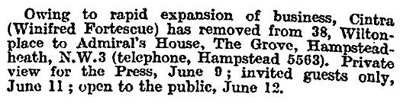
During a visit to Portugal, Sir Herbert Cook, who had been made Visconde de Monsterrate by King Manoel, invited John and Winifred Fortescue to stay with him in his Palace of Montserrate at Sintra, (Cintra). Winifred never forgot her arrival and stay in Cintra and described it as 'an exotic dream'. During this stay she took the decision to go into trade. Winifred did not intend to mix her social and business life and in 1920 adopted the name 'Cintra', for the business woman. She also wanted to succeed on her own merits and new that if the press found out that she was running a business to help John finish writing his famous 'History of the British Army', they would make a story out of it. Sir Herbert Cook was keen to back Winifred and suggested she take up house decoration. She took back from Portugal some old carved beds, ancient brocades and other items to catch the eye of the London public. Some weeks later 'Cintra' commenced operation from a tiny second floor flat at 38, Wilton Place, Knightsbridge. She purchased the lease and remaining stock from an Italian who, having made his fortune, was retiring to Italy. |
|
Newspaper notice June 8th 1920 |
Newspaper notice June 15th 1920 |
|
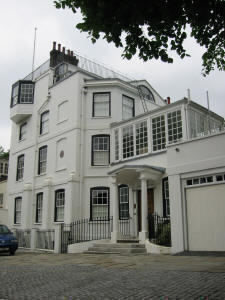
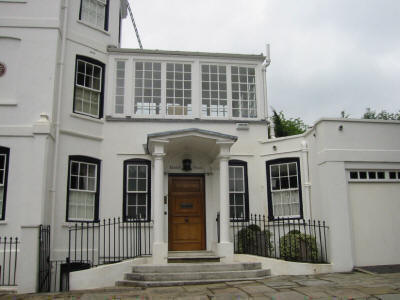
Admiral's House,
|
The business took off and within 3 months it was obvious larger premises would be needed. Customers were asking Winifred for specific requests and feeling bold she employed a woman to work for her on the top floor of their home at Admiral's House, Hampstead. After a search, a ground floor shop in Sloane Street was found but just as the lease was about to be signed the project was crushed as a result of bad luck. The couple discovered massive repairs, (estimated at £3000!), were urgently needed to their home and so 'Cintra' operations were moved to the top floor of Admiral's House. The house was adapted to incorporate a showroom, fitting rooms etc on the 1st floor and the whole of the top floor became workrooms. With the general slump of the 1920's, by 1922 people found they could not afford to 'do up' houses. Knowing women must clothe themselves she concentrated on clothes choosing exclusive materials and designing each gown for its individual wearer. Much of the material came from 'Bianchini' and so developed an exclusive business. As it grew and prospered she engaged a cutter and fitter, an army of work girls and some showroom assistants. The continued expansion put considerable pressure on Winifred, who did not enjoy the best of health at times. There was the constant demand to meet orders, keep accurate accounts, pay wages and get customers to settle their bills. |
|
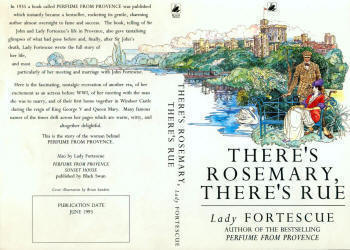
'There's Rosemary There's Rue' |
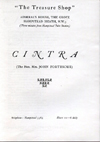 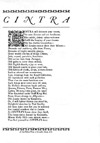
Advert for 'The Treasurer Shop' at Admiral's House. 3mins from Hampstead Tube Stn. & open daily 10am-6pm. Inside is one of John's clever Rondeaux describing her products |
|
After the Summer Holidays in 1922, taken in Gibraltar & Brittany, business carried on expanding. Many of her gowns were ordered by the court and for debutantes. There were fashion shows at intervals and one of the most important was given on a fine evening in June of that year in the garden of Admiral's House. Pages 276-279 of 'There's Rosemary There's Rue' give a splendid description of the illuminated proceedings.
|
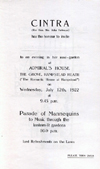
Invitation to a 'Cintra' evening in the rose-garden at Admirals House. 9.45pm Wed 12th July 1922. Parade of Mannequins to music through lantern-lit gardens at 10.00pm, iced refreshments served on the lawn |
||
|
The Times May 7th 1921 The Times November 4th 1921 |
|||
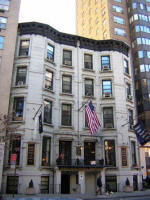
Soldier's, Sailor's, Airmen's & Marine's Club
|
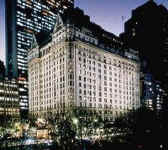
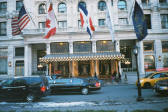
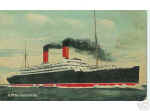
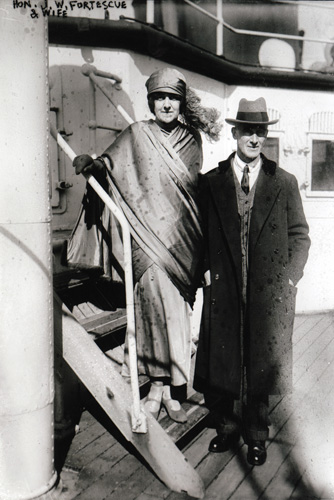
CINTRA in the U. S. A. An American friend who had been at the fashion parade in June 1922 invited Winifred to New York. She was asked to bring a collection of evening gowns and cloaks for a fashion show at The Plaza Hotel, New York in aid of the soldiers and sailors of the USA returning from the Great War. (The funds were required to build a club, which still thrives on Lexington Ave, New York, where servicemen & women can stay. It is now known as the Soldier's, Sailor's, Marine's & Airmen's Club. ) It was somewhere she had wanted to visit and managed to persuade John to agree to the trip. He went with her - purely to look after her. There was much preparation before departure on the Cunard 'Caronia' for a five week visit. They arrived at Ellis Island on 29th October 1922.
Arriving in New York on the RMS 'Caronia' 29th October 1922 Click here to see the New York Times report of their arrival 30th Otober 1922. The main event was held on the 9th November 1922 in the Plaza Hotel Golden Ballroom which was equipped with 3000 gilded chairs! 'Cintra' herself was to act as Mistress of Ceremonies and must have been an impressive sight on the stage with lights, orchestra and a jungle of palms and exotic plants. Her own outfit is described as follows:
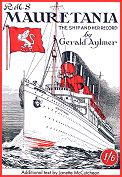
Complications caused by a malicious and unfounded report concerning John in the US press caused the cancellation of a lecture he had agreed to give at West Point on Armistice Day but the trip and the fashion show were in the main a success - Winifred even sold all her personal American outfits 'off her back'. This together with some other less expensive sales just paid for their fares home on board the RMS 'Mauretania'. |
||
|
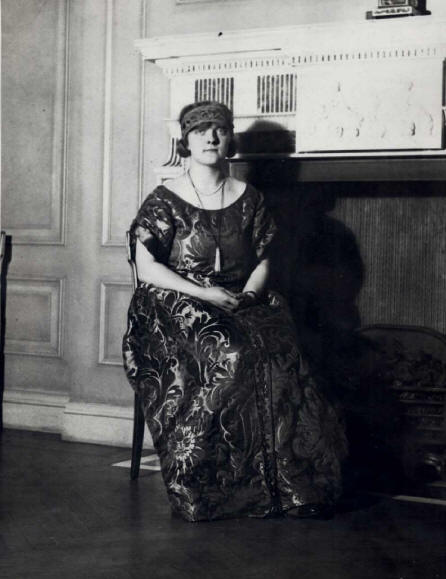
A Cintra Dress!
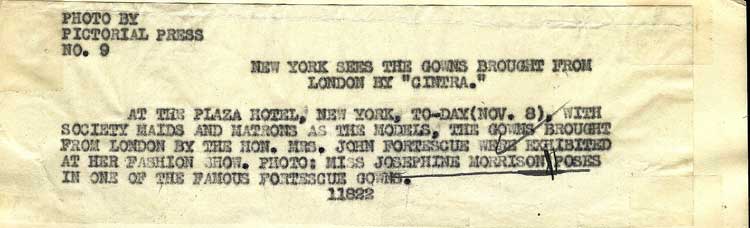
Miss Josephine Morrison poses in one of Winifred's famous 'Cintra' dresses the day before the Plaza fashion show The photograph, taken by The Pictorial Press, was recently obtained from the U.S.A and is an official press photo from the day before the fashion show at the New York Plaza Hotel. It features Miss Josephine Morrison wearing one of the famous 'Cintra' dresses which Winifred made and transported to New York specifically for this show.
|
|
|
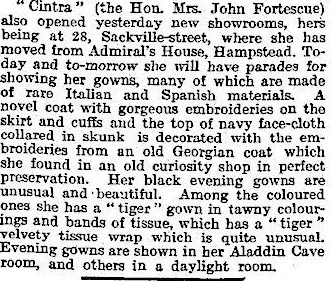
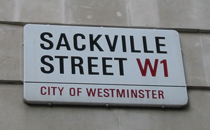
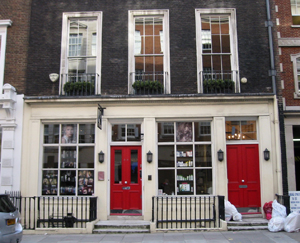
On her return to London Winifred had a very hard struggle to regain a foothold. Many customers had preferred to await her return in person. She was forced to work doubly hard by day and into the night to retrieve her financial position and pay waiting bills. There had been talk for some time about moving the business down to Lower London for the benefit of those not wishing to make the journey to Hampstead during the season. Winifred was suffering more health problems and her husband, although seeing the advantages, was very concerned about her health which was steadily deteriorating. After some difficulty she eventually over persuaded John and began to search for suitable premises. She eventually found the upper and second floor of 28 Sackville Street. It was central with light airy rooms and a lift for her staff and customers. Before very long the cars of gracious ladies were blocking Sackville Street and she was busier than ever! There were more fashion shows, sometimes at short notice, visits to Kensington Palace to attend Princess Louise and dress designing for the stage. This immense work load could not continue as even customers who were strangers noticed Winifred's fragile appearance. After consultation she was taken to hospital for an immediate operation. When strong enough to be moved John & Winifred went to Brittany as sea air had been prescribed. Whilst there, Winifred resolved to work even harder on her return, but John had been told by her consultant that it was a case of the demise of Winifred or the 'Cintra' business.
October 9th 1923 |
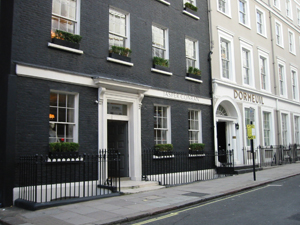
28 Sackville St, London
Neighbouring buildings in Sackville Street - J. Conran |
|
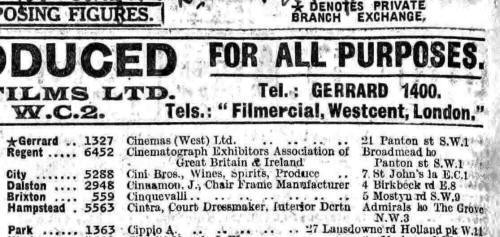
1921 Directory Entry for Cintra at Admiral's House, Hampstead Heath
1924 Directory for Cintra at 28 Sackville Street |
|
|
Clothes designed by Lady Fortescue Picture frocks are “Cintra’s” best designs, and she can use rich fabrics well when boldly adapting a medieval style. There were a winged tea gown like some gorgeous earthbound bat, and a lovely medieval gown of lemon taffetas striped with silver that left charming memories. For a presentation at court, June 1922, for Mrs de Trafford The Times October 9th 1923 For her niece’s wedding gown: The bride, who was given away by her mother, wore a gown of medieval design made of magnolia silken brocade, embroidered with golden sprays, with a girdle of gold. Her veil of magnolia ninon was caught with a spray of orange blossom and she carried a sheaf of arum lilies. |
|
|
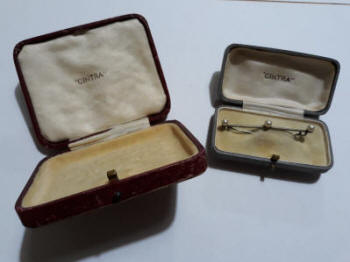
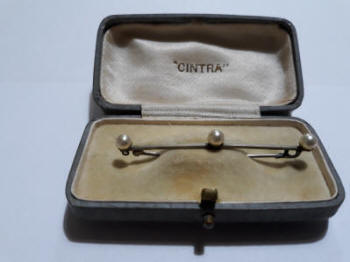
Wishing to return home and about to take up the reins again it was with immense difficulty that she faced up to the reality of the situation when confronted by her husband. With the 'History of the British Army' still not finished she felt she would only be a burden and expense to him. Winifred does not go into great detail about her illness, often referring to it as a poison. This is confirmed in John's own autobiography, 'Author and Creator', published in 1933 in which he describes his wife as 'fighting against some obscure poison, picked up in a military hospital, which was steadily undermining her strength'. She became very business like and arranged for the sale of her remaining models and the letting of 28 Sackville Street through her head worker 'Ninon', who she met a few days later in Paris. She could not face the ordeal of the final closing of the business and dismissing of the girls in person. The following six months were difficult ones, living the life of an invalid and dealing with inquiries and orders that still flowed in from people unaware of the closure. One envelope contained an order from the Vice-Reine of India, Lady Reading, with an order for eighteen state gowns. It was given to John to deal with. After this Winifred asked John to help her make a bonfire upon which all the 'Cintra' books, designs and newspaper notices were thrown and that was the end. It was 1924. Although the end of the fashion business 'Cintra' would re-appear.........in print!! 2020 - I have been fortunate in obtaining not one but two 'Cintra' items produced by Winifred Fortescue in the heady days of her fashion business. They are both jewellery boxes, one red and the other a soft grey, and the grey one actually contains an original piece of jewellery. It has been examined and is a bar with 3 pearls, the bar is actually copper base metal with a silver finish and dates from the 1920's or 30's. A classic piece of costume jewellery that she would have been producing for her clients in London. Below are photos of these two great finds.
|
Pictures - P.Riley - Black Swan - A niece of Lady Fortescue